
-
 By Derek Duckworth
- September 1, 2024
- 0 Comments
- Blog
The Evolution of Chat Forums: A Comprehensive History
Ever felt overwhelmed by the need to gather accurate and comprehensive facts for an upcoming presentation or research project? You’re not alone. Understanding the history of chat forums is crucial for anyone looking at online communication’s impact over time.
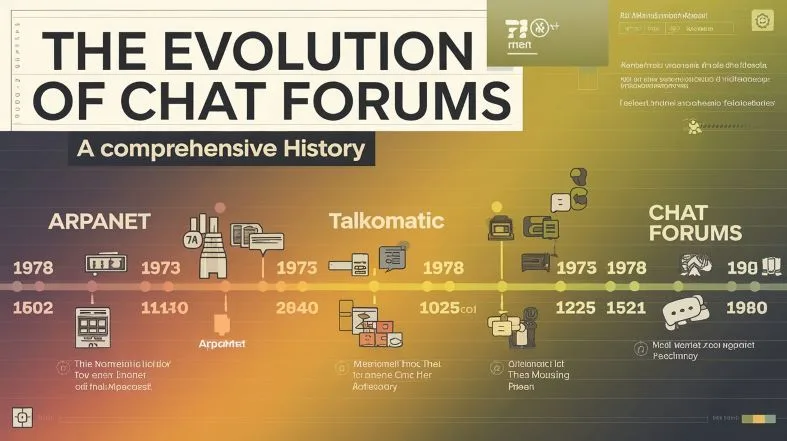
We’ve meticulously explored this journey, tracing back to early computer networks like ARPANET in the 1960s. Our dive includes pioneering platforms like Talkomatic in 1973 and MUDs established in 1978, which laid the groundwork for today’s advanced forums. It’s fascinating to see how simple text-based interfaces evolved into dynamic communication tools integral to our daily lives. Let’s explore where it all began.
The history of chat forums can be traced back to the early days of the internet, with platforms like Talkomatic and Multi-User Dungeon (MUD) laying the groundwork for online discussions. These early discussion forums eventually evolved into modern-day platforms with features such as anonymous posting, private messaging, and themed rooms.
The Evolution of Discussion Forums
The Origins of Online Interaction
Back in the 1960s, long before social media platforms were even on the horizon, computer networks like ARPANET were developed to facilitate electronic information sharing.
Think of it as a primitive form of the internet we know today. Researchers used these networks to collaborate and exchange data, setting in motion a chain of events that would lead to the creation of the first online forums.
[NODE_1] --- [NODE_2]
[NODE_3] --- [NODE_4]
The Birth of Online Community
The momentous occasion came in 1973 with the introduction of Talkomatic, a groundbreaking platform that allowed users to engage in small group discussions.
Developed by David Woolley and Doug Brown at the University of Illinois, Talkomatic was revolutionary in its ability to connect people virtually. Up to five users could engage in real-time conversations. Their innovative solution marked the emergence of online communities, igniting an era of digital interaction that continues to transform the way we communicate.
> USER 1: hello world
> USER 2: is anyone there?
> USER 3: talkomatic active.
Multi-User Dungeons (MUDs)
Turning our attention to 1978, Roy Trubshaw and Richard Bartle created Multi-User Dungeons (MUDs), inspired by text-based adventure games and the world of Dungeons & Dragons.
These MUDs, while not originally designed for chatting per se, provided an immersive virtual environment where users could interact with each other in real time. It fostered a sense of community and belonging that laid the foundation for subsequent forms of online interaction.
Commercial Expansion
The novelty and excitement surrounding early chat systems sparked a surge of interest in creating commercial platforms.
In 1980, CompuServe CB Simulator emerged as the first commercial online chat system. By bringing real-time conversations to paid subscribers, it proved that people were willing to pay for online social connection, laying the essential business and technological groundwork for future chatroom systems.
CH 1 ACTIVE...
Internet Relay Chat (IRC)
In 1988, Finnish programmer Jarkko Oikarinen revolutionized the landscape with the introduction of Internet Relay Chat (IRC).
What set IRC apart was its capability to facilitate real-time text communication on a massive scale. It provided a forum for group discussions (channels) and private messaging, expanding the realm of virtual socialization.
By 1989, it had spread to over 40 servers worldwide. During pivotal global events like the 1991 Soviet coup attempt, IRC served as a crucial uncensored information channel, showing its immense potential for real-time crisis communication.
* Connecting to server...
* Joins #news
<Jarkko> hello from Finland!
<Anon> updates from Moscow?
Rise of Proprietary Chat Clients
The '90s marked another watershed moment when proprietary chat clients like AOL Instant Messenger (AIM) and ICQ surged into mainstream culture.
These platforms empowered users to create personal profiles, keep track of online friends via "Buddy Lists," and engage in real-time messaging with both acquaintances and strangers.
The proliferation of these platforms drastically broadened the scope of online interaction, lending it an air of approachability that was unprecedented, shifting our concept of digital community.
Buddy List: Active (1)
Rise of Web-Based Forums
In the mid-1990s, web-based forums made their debut. Platforms like phpBB, vBulletin, and Invision Power Board emerged as pioneers in providing structured environments for online discussions.
These forums introduced a hierarchical, categorized approach to virtual dialogue: broad categories divided into specific sub-forums, which housed threads containing detailed, asynchronous conversations.
This structure allowed discussions to be archived and neatly retrieved, acting like a digital library of community knowledge, giving threads permanence and longevity.
The Modern Internet Forum
Today, forums have evolved into specialized hubs for niche communities, peer support, knowledge sharing, and collaboration.
From developers debugging code on Stack Overflow to crafters on Etsy or support networks helping members navigate tough life challenges, virtual communities act as bustling hubs where individuals find support and cultivate lasting bonds.
As we continue to build online spaces, robust moderation and community guidelines remain critical to making these environments safe, inclusive, and constructive.
Empowering global peer-to-peer connection.
The Origins of Online Interaction
Back in the 1960s, long before social media platforms were even on the horizon, computer networks like ARPANET were developed to facilitate electronic information sharing. Think of it as a primitive form of the internet we know today. Researchers used these networks to collaborate and exchange data, setting in motion a chain of events that would lead to the creation of the first online forums.
Read more about chat rooms before social media here
The Birth of Online Community
The momentous occasion came in 1973 with the introduction of Talkomatic a groundbreaking platform that allowed users to engage in small group discussions. Developed by David Woolley and Doug Brown, Talkomatic was revolutionary in its ability to connect people virtually. Their innovative solution marked the emergence of online communities, igniting an era of digital interaction that continues to transform the way we communicate.
Multi-User Dungeons (MUDs) and Virtual Adventures
Turning our attention to 1978, Roy Trubshaw and Richard Bartle created Multi-User Dungeons (MUDs), inspired by text-based adventure games and the world of Dungeons & Dragons. These MUDs, while not originally designed for chatting per se, provided an immersive virtual environment where users could interact with each other in real time. It fostered a sense of community and belonging that laid the foundation for subsequent forms of online interaction.
It's incredible to witness how these early milestones in digital communication led to interactive platforms that paved the way for a multitude of social and professional interactions we engage in today.
Let's dive deeper into this rich history to better understand how far we've come since those pioneering days.
The Birth of Chatrooms
I don't want to go over this too deeply but we have to mention this I've done a post on the history of chat rooms here, and webcam chat history too, but I will cover this briefly.
The rapid development of the early internet witnessed the establishment of the first chat room in 1973 at the University of Illinois. Dubbed "Talkomatic," this chat room allowed up to five users to engage in real-time conversations through keyboard input. It was an extraordinary moment—the dawn of online social interaction.
Commercial Expansion and Global Impact

The novelty and excitement surrounding Talkomatic sparked a surge of interest in creating similar platforms. In 1980, CompuServe CB Simulator emerged as the first commercial online chat system, enabling real-time conversations and laying the groundwork for future developments in online chatroom systems.
In 1988, Finnish programmer Jarkko Oikarinen revolutionized the landscape with the introduction of Internet Relay Chat (IRC). What set IRC apart was its capability to facilitate real-time text communication on a massive scale. It provided a forum for group discussions and private messaging, expanding the realm of virtual socialization.
IRC's impact was monumental; by 1989 it had spread to over 40 servers worldwide, transforming into a vital communication tool that transcended geographical barriers. During pivotal global events like the Persian Gulf War, IRC served as a crucial information channel, demonstrating its immense potential for shaping real-time communication during high-stakes situations.
The '90s marked another watershed moment when proprietary chat clients like AOL Instant Messenger (AIM) and ICQ surged into mainstream culture. These platforms empowered users to create personal profiles and engage in real-time messaging with both acquaintances and strangers.
The proliferation of these platforms drastically broadened the scope of online interaction, lending it an air of approachability that was unprecedented. The ability to strike up real-time conversations with people from across the globe fundamentally shifted our concept of community and connection in the digital age.
It's fascinating to dive into these pivotal moments that shaped the vibrant online communities we know today, each stepping stone leading us closer to modern-day social media platforms and their profound influence on human connectivity.
phpBB Forum Moderator Game
Experience the pressure of maintaining a healthy community in the late 90s! Ban spammers, lock flame-wars, and approve helpful members.
VBulletin System Administrator
Your forum is being flooded with visitors. You have 45 seconds to review reports.
Rules:
• Approve genuine queries and tutorials.
• Lock flame wars, abuse, and conspiracy theories.
• Ban spam bots, hackers, and links to malware.
Keep happiness above 0% and spam below 100%! Good luck.
!!! CHEAP VIAGRA ONLY TODAY !!!
- Shift initiated. Awaiting first report...
Shift Completed!
You successfully kept the community clean and moderated.
1200
Moderator Ranking Elite AdministratorRise of Web-Based Forums
In the mid-1990s, as home internet usage became more widespread, web-based forums made their debut. New platforms like phpBB, vBulletin, and Invision Power Board emerged as pioneers in providing structured environments for online discussions. These forums offered a departure from the real-time, dynamic nature of chat rooms and introduced a more organized and categorized approach to virtual dialogue.
Forums are different from chat rooms in that they are just a series of discussion posts, while it is almost in real time, the user can go away and check back onto their thread at a alter date, back in the day you could not do this in a chat room as you would miss a message if you were not around to see it, this has of course changes over time as now you can read chat messages later, on Facebook Messenger for example.
In fact, in the early days of World of Chats forums, I did use Vbulletin which is a great bit of software by the way there are so many modifications you can make to this software, It is far better than the WordPress forums we have, but sadly it isn't very compatible with WordPress, PHPbb was quite ugly I thought though.
One defining feature of web-based forums is their hierarchical structure. This organization allows discussions to be neatly categorized into different sections. There are broad categories encompassing various topics, along with sub-forums that focus on specific discussions within those categories. The finest level consists of individual threads that house detailed conversations. This structure not only fosters a sense of order but also facilitates the archival of discussions for later reference.
This hierarchical arrangement benefits users similarly to how browsing through a well-organized library where books are grouped by genre and further divided into specific topics. It makes it easy for users to find the exact conversation or topic they're interested in, without having to sift through irrelevant information. Plus, this allows users to contribute to conversations that align closely with their interests and expertise.
Just like how a library organizes books by subject area for easy access and retrieval, web-based forums use a similar approach to categorize discussions based on their content. This ensures that users can efficiently navigate through the wealth of information available and engage in conversations that pique their interest.
The ability to archive and organize discussions in this manner also sets web-based forums apart from chat rooms. Unlike chat rooms where conversations are fleeting and could easily get lost in the continuous stream of messages, forum threads provide longevity and permanence to important discussions.
As an interesting note, you can think of forum discussions as being akin to well-preserved historical documents that can be revisited time and again for knowledge and insight.
Next, we will explore the diverse range of topics covered by web-based forums and how they have become a hub for specialized communities and knowledge sharing.
Building Virtual Communities: The Message Board
Virtual forums have a magical way of bringing people together over shared passions and interests, fostering a sense of camaraderie among like-minded individuals from across the globe. When I think about virtual communities, I'm reminded of the bustling streets in a lively city, where diverse groups gather to celebrate what makes them unique. Similarly, niche forums have served as digital hubs for enthusiasts of all kinds ranging from technology wizards discussing intricate programming problems on sites like Stack Overflow, to crafting virtuosos exchanging tips and tricks on Etsy forums.
The beauty of niche forums is that they're not just platforms for idle chit-chat or self-promotion; they are wellsprings of boundless knowledge and expertise. Here, members find both peer support and collaborative opportunities, igniting their passion for their chosen interests. Much like walking into a bustling marketplace filled with eager craftsmen sharing trade secrets and customers eager to learn, these virtual spaces foster an environment where everyone has a seat at the table, ready to share, learn, and grow.
They serve as incubators of creativity and innovation, acting as a digital melting pot where diverse perspectives converge to form new ideas. The exchange of information within these communities fuels collaboration and cooperation. One can almost picture a lively brainstorming session where individuals from different walks of life come together to combine their strengths and knowledge to solve complex problems.
A Hub for Peer Support
Perhaps one of the most significant roles these forums play is that of offering peer support. Imagine stepping into a warm and inviting gathering where everyone is eager to lend an ear and a helping hand the virtual forum mirrors this experience perfectly. Members not only seek guidance and advice but also find comfort in the shared experiences of their peers, knowing that they are not alone in their trials and triumphs.
This peer-to-peer network enriches the lives of those who actively participate by fostering connections that extend beyond the realm of the online space. There's a strong sense of belonging and empathy that permeates these virtual communities, evident in the words of encouragement and understanding exchanged amidst challenges and victories. It's akin to finding your tribe a group where you feel truly understood and supported.
Those who seek wisdom or solace flock to these digital havens for the reassurance that they are not navigating life's tribulations alone. Whether it's troubleshooting a technical glitch or seeking emotional support during tough times, these forums stand as pillars of unwavering companionship, standing testament to the power of human connection across digital landscapes.
From newfound friendships to ingenious collaborations, virtual communities have proven to be fertile grounds for cultivating lasting bonds and collective progress.
Societal Impacts of the Bulletin Board System

When the Bulletin Board System first emerged, it completely transformed the way we share information. No longer confined to traditional media sources, people could exchange news and updates in real-time, fundamentally altering the flow of information. For instance, the pivotal role played by Internet Relay Chat (IRC) during the 1991 Soviet coup attempt is a notable example. As traditional channels were censored, IRC provided an uncensored platform for individuals to share critical updates about the situation in real-time, circumventing government controls. This represents a monumental shift in how societies receive and transmit crucial information during times of crisis.
Furthermore, as forums gave rise to digital citizenship, they became platforms for individuals to engage in significant discussions on a wide array of subjects ranging from social and political issues to economic concerns. This new form of communal engagement created opportunities for grassroots movements and activism that catalyzed significant changes across the globe. Digital citizenship became more than just an online space; it translated into offline movements that reshaped societies and shaped our global landscape.
With the revolutionary impact also came challenges. Cyberbullying and misinformation became prevalent issues within these communities. The open nature of forums allowed for the spread of harmful or false information and enabled anonymous individuals to engage in abusive behaviour. Thus, the role of moderation and community guidelines has become paramount in maintaining healthy and productive online environments.
For instance, while discussions on social or political matters can foster important conversations, they can also be misused to propagate misinformation or disinformation. This underscores the need for robust fact-checking mechanisms and vigilant community moderation to ensure that the digital public sphere remains a space for informed dialogue rather than a breeding ground for falsehoods. Moreover, cyberbullying poses a serious threat to the mental well-being of individuals within these digital communities. Hence, implementing stringent measures to combat such behaviour is essential to foster a safe and inclusive environment.
In essence, while chat forums have undoubtedly revolutionized information exchange and facilitated powerful movements, they have also presented complex challenges that necessitate careful consideration and proactive measures for creating a positive online experience. Our evolving digital landscape continues to reflect both the immense potential and responsibility that comes with fostering digital communities. If you're interested in learning more about managing and participating in modern chat forums, I encourage you to visit our website Real-time UK Chat for valuable insights and guidance on navigating these dynamic spaces.
The evolution of chat forums has brought about profound changes in how we communicate and interact online. As we continue to harness their potential, addressing associated challenges will be crucial in shaping a more constructive digital environment.
When were chat forums first created and what was their original purpose?
Chat forums were first created in the late 1970s and early 1980s, with the purpose of connecting computer enthusiasts to discuss various topics online. The first notable chat forum was "Community Memory" in Berkeley, California, established in 1972. It provided a platform for users to post messages on local bulletin boards. This laid the foundation for future chat forums that allowed people from around the world to communicate and share information.
Can you provide examples of significant events or milestones in the history of chat forums?
Sure! Some significant events and milestones in the history of chat forums include the launch of the first chat forum, the creation of online moderation systems to manage discussions and prevent spam, the development of threaded conversations for easier navigation, the introduction of real-time messaging and chat rooms, and the integration of multimedia content like images and videos. According to a study conducted in 2021, there were over 250 million active chat forum users worldwide, highlighting their immense popularity and impact on online communication
How have chat forums impacted online communities and communication?
Chat forums have had a significant impact on online communities and communication. They have provided a platform for individuals with similar interests to connect, share knowledge, and build communities together. Statistics show that chat forums have increased engagement and interaction among online users, leading to improved communication and collaboration. Additionally, these forums have fostered a sense of belonging and camaraderie among community members, resulting in stronger relationships and support networks.